
In Anime Last Stand, casual players know who is strong, but advanced players understand why they are strong. This guide dives into the game’s underlying mechanics, empowering you to achieve maximum theoretical damage, optimize your unit setups, and exploit hidden buff/debuff interactions.
Core Promise: Detailed explanations of damage formulas, buff/debuff stacking rules, and lesser-known hidden mechanics that can elevate your gameplay from competent to elite.
Keywords: Anime Last Stand advanced mechanics, max damage, buff stacking, hidden game mechanics
II. Core Formulas: Damage & Defense Math
A. Unit Base Damage Formula
The foundation for calculating maximum DPS:
Final Damage = (Base Attack + Upgrade Bonus) × (1 + Trait Bonus) × (Multiplicative Buff 1) × (Multiplicative Buff 2) × …
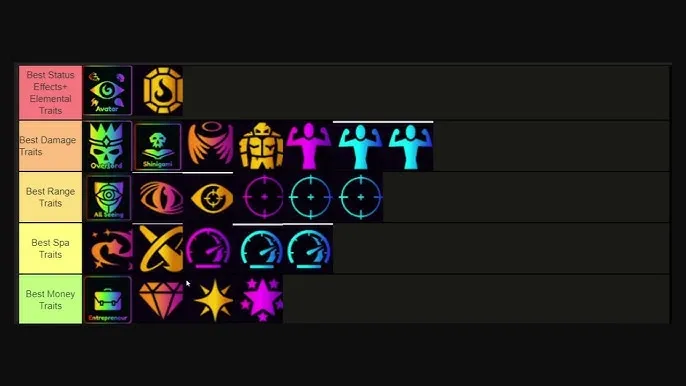
- Additive Traits: Fixed attack increases that add directly to base damage.
- Multiplicative Traits: Percentage-based damage increases; these have higher priority in damage calculation.
Keywords: Anime Last Stand damage formula, DPS calculation, unit traits
B. Enemy Defense & Resistance
- Defense Mechanism: How enemy defense reduces damage (flat reduction vs. percentage reduction).
- Resistance Types: Physical, energy, and elemental resistances explained, essential for optimal unit targeting.
C. Critical Hit Mechanics
- Crit Rate & Crit Damage: How crits are calculated, and which units have natural critical advantages.
- Critical Stacking: Units or auras that can further amplify critical damage for high-end strategies.
Keywords: critical hit, Anime Last Stand crit mechanics, high damage setup
III. Effect Stacking: Aura, Buffs & Debuffs
A. Buff Stacking Rules
- Same-source vs Different-source Buffs: Determines whether buffs from multiple units or skills stack.
- Multiplicative vs Additive Buffs: Which buffs maximize damage output.
Example: Combining a multiplicative DPS aura with additive unit traits yields higher damage than stacking multiple additive buffs.
B. Debuff Stacking Rules
- Defense Reduction Debuffs: Units that apply armor break or vulnerability effects.
- Priority Rules: When multiple debuffs are active, the system applies the highest or additive effect depending on type.
C. Special Effects
- Splash & Chain Effects: How splash damage and chain lightning scale and decay across targets.
Keywords: Anime Last Stand buff stacking, debuff mechanics, advanced strategy
IV. Hidden Mechanics & Advanced Tactics
A. Attack Range Calculation
- Geometry: How the game computes attack coverage on grid maps.
- Optimal Placement: Maximize attack coverage to hit multiple enemies efficiently.
B. Cooldown Reduction (CD) Limits
- Max CD Reduction: Is there a soft/hard cap on cooldown stacking?
- Unit Priority: Which units’ CD reductions are worth maximizing for high-speed rotations.
C. Map-Specific Cell Mechanics
- Tile Bonuses/Penalties: Certain maps grant hidden effects to units standing on specific cells.
- Sell-Unit Tricks: Selling units mid-wave can trigger unexpected buffs or provide emergency resources.
Keywords: Anime Last Stand hidden mechanics, cooldown stacking, map cell bonuses
V. Conclusion & Practical Application
- Theoretical Testing: Apply formulas to predict a new unit’s maximum damage potential.
- Community Engagement: Share screenshots of your DPS setups; discuss with other advanced players if you’ve reached theoretical damage limits.
- Further Reading: Check out our Raid strategies and Inferno mode guide to test these theories in high-difficulty scenarios.